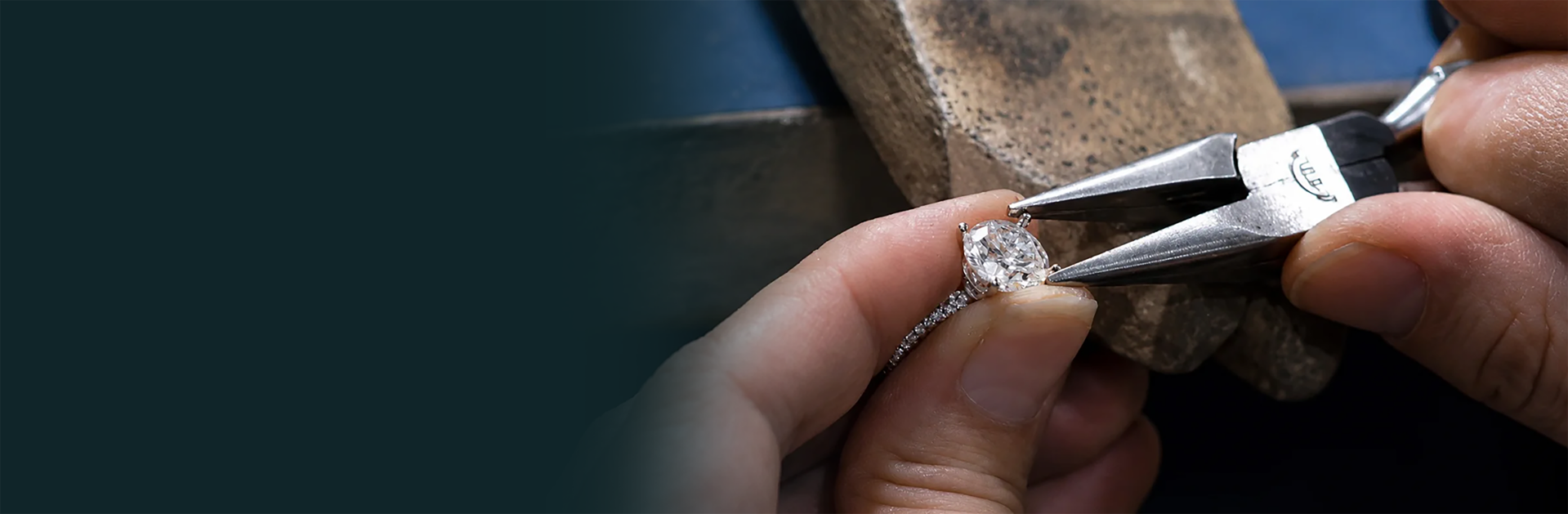
Stone setting is the process of securing a gemstone within a metal mount. It shapes the character of a piece as much as the stone itself: the line of a claw, the edge of a bezel and the spacing of a pavé surface all influence the finished design.
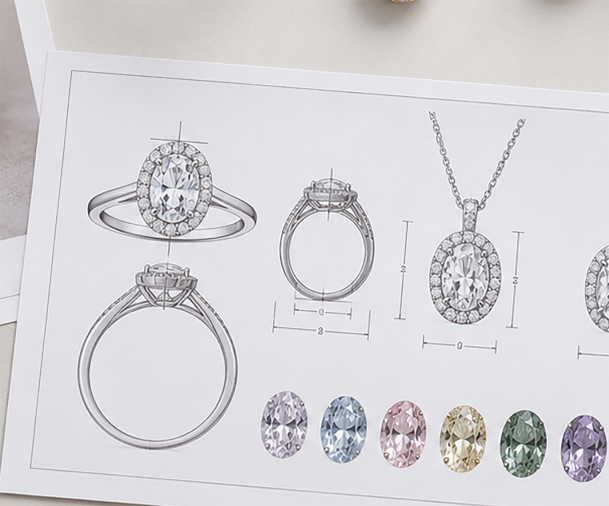
At Barry Jewelry, we bring gemstone setting into the wider custom jewelry manufacturing process. Design, stone selection, casting and finishing need to work together. A setting that looks attractive in a drawing must also allow practical assembly, reliable support and a comfortable profile.
From an individual centerpiece to a coordinated collection, we help turn your references into a clear production brief. Share the look you want, the materials you prefer and the intended price point. We can discuss a setting direction that respects both your design and its production requirements.
Jewelry stone setting techniques
Six setting approaches to discuss for your collection. The appropriate method depends on stone shape, metal, scale and the way the jewelry will be worn.
Prong Setting
Prong setting uses individual metal claws to hold a stone. It leaves much of the gemstone visible and suits center stones, studs and solitaire pendants. Rounded tips create a softer outline; claw tips give a more defined finish. The number, position and thickness of prongs should follow the stone shape and support needed.
Pavé Setting
Pavé setting arranges small stones closely across a surface, secured by small beads or prongs. It can add detail to ring shoulders, halos, earrings and pendants. Matching stone sizes and even spacing are central to a balanced appearance. The surrounding metal must remain strong enough after the seats are prepared.
Micro Pavé Setting
Micro pavé setting creates delicate patterns with very small stones and fine metalwork, typically worked under magnification. It is useful when the design calls for subtle borders or densely set surfaces. Discuss the achievable stone size, layout and maintenance considerations during sampling, since an extremely fine appearance also requires careful structural planning.
Bezel Setting
A bezel setting holds a gemstone with a surrounding metal rim. It creates a distinct border and can help protect exposed edges. Full and partial bezels offer different visual effects. The rim needs to suit the stone's outline and depth, with enough material to close neatly without making the finished piece unnecessarily bulky.
Channel Setting
Channel setting positions stones in a row between two metal walls. It is often considered for bands and linear jewelry details where individual external claws would interrupt the design. Consistent stone dimensions, carefully prepared seats and adequate wall thickness help produce a level row with a clean, continuous outline.
Flush Setting
Flush setting places a gemstone into the metal so its top sits close to the surrounding surface. It can create restrained accents on bands, signet styles and pendants. The design needs sufficient metal depth to support the stone. A smooth finished edge is essential to the intended low-profile appearance.
Plan the setting around the gemstone.
Diamond setting and colored gemstone setting begin with different material questions. Stone dimensions, girdle condition, cut, inclusions and any treatments can affect how a piece should be handled. A nominal size alone does not describe the exact fit of an individual stone.
For lab-grown diamond setting, moissanite setting and cubic zirconia setting, we review the specified shapes and dimensions alongside the mount. These materials offer different options for a collection, but they should be identified accurately in the product specification and final sales description.
Natural and lab-grown colored gemstones need their own assessment. Treatments can influence sensitivity to pressure, heat or cleaning, so disclose available stone information early. The choice of 925 sterling silver, gold or a plated base metal also affects the structure and finishing sequence.
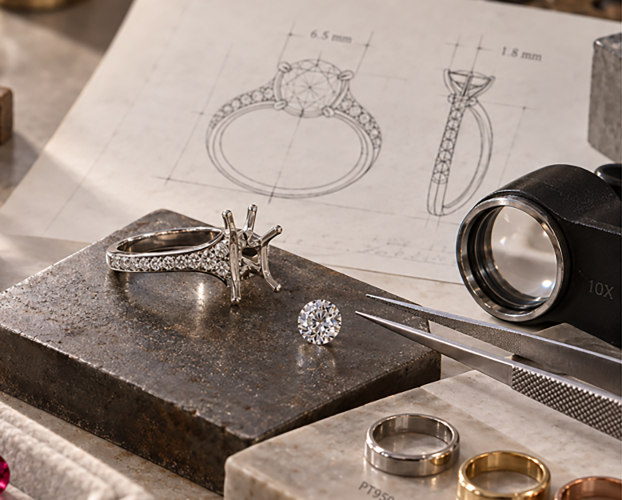
Look beyond the first sparkle.
A bright surface alone does not establish setting quality. Our approach considers the relationship between the stone and its support, as well as the finish customers will see and feel.
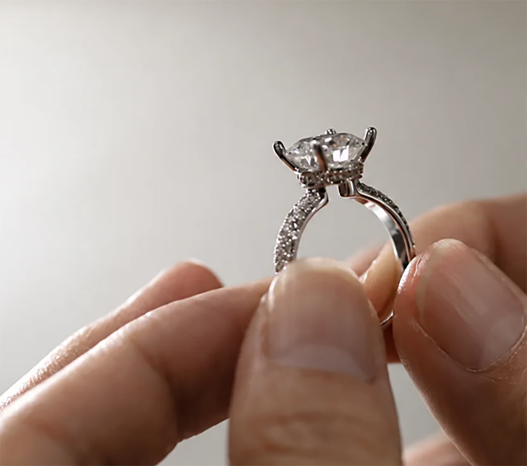
- Security: assess seating and contact, with attention to unwanted movement and visible gaps.
- Alignment: review stone orientation, spacing and level across the design.
- Metalwork: examine prong shape, bead consistency, bezel edges and accessible surfaces.
- Stone condition: look for visible chips, abrasions or other concerns following setting gaps.
- Wearability: review sharp edges, rough areas and the intended jewelry profile.
Agree the acceptance details during sample review. A shared reference makes discussions about spacing, finish and proportions more precise when a collection moves into production.
Custom stone setting from sample to series.
Jewelry brands, independent designers and wholesale teams often need the same visual language across several products. A ring, a pendant and a pair of earrings can share a stone shape while requiring different support, weight and proportions.
For OEM and ODM projects, define the design family before finalizing each item. We can discuss a consistent approach to stone sizes, prong appearance, surface finish and matching details. This helps preserve the collection identity without forcing every piece into the same construction.
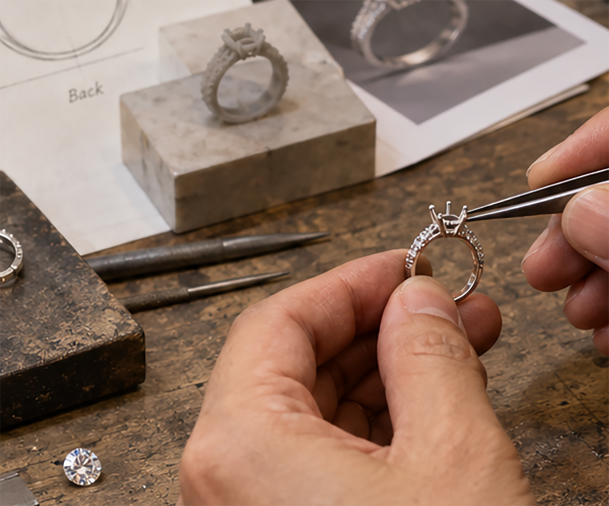
Use sampling to review the jewelry from the front, side and back. Confirm the actual stone layout, finish and scale before approving production. Reorders should refer to the agreed specification, including any revisions, so later discussions start from the same reference.
Setting cost depends on stone count, size, shape, technique and access, alongside material and finishing requirements. Send your target quantity and budget with the design. A simpler layout, a different stone arrangement or a revised mount may offer a practical route to the intended price point.
Frequently Asked Questions
Common questions from brands, retailers and wholesale buyers developing custom gemstone jewelry collections.
Prongs secure a stone at separate points and leave more of its outline exposed. A bezel frames it with a metal rim. The choice affects the look, profile and edge protection of the piece. Discuss stone shape and intended use before choosing.
Yes, a design can combine techniques, such as a prong-set center with pavé accents. The combination needs to allow enough metal support and practical access for setting. Submit the complete design so the relationship between its parts can be reviewed.
Yes. Share drawings, photographs or CAD files with your intended dimensions and materials. Include close views of setting details where possible. References help communicate the appearance; a production review then establishes the structure needed to make the jewelry.
Discuss a sample or trial order with our team before planning a larger run. Minimum quantities, sample charges and schedules depend on the design, materials and setting work. These details are confirmed through the project quotation.
Send the jewelry design, stone type and dimensions, approximate stone count, metal, finish and order quantity. Add your target delivery date and any special requirements. If some specifications are undecided, identify them so they can be discussed before pricing is finalized.
Care depends on the gemstone, its treatments, the metal and the setting. Provide material-specific guidance with the collection. Avoid assuming that every piece tolerates the same cleaning method, and arrange professional inspection if a stone moves or the metalwork becomes damaged.