Start with six essential details
Fill what you know
1. What are we making?
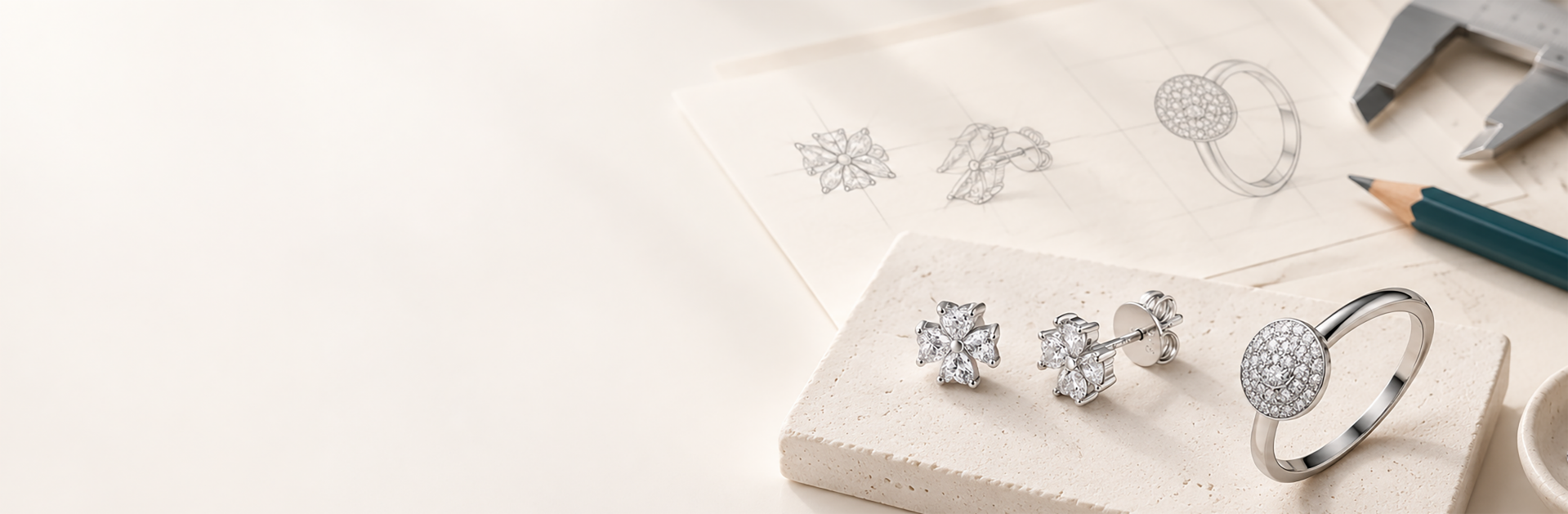
Begin your custom jewelry design brief with a project reference, product description, and the image or drawing you want us to discuss. "Flower stud earrings" identifies the category; "a pair of four-petal studs with blue stones, retaining the outline of our reference" explains the request. State what should stay and what should change. If you have several images, name the role of each one. One may show the shape, another the finish, and a third the connection. This gives us a clear starting point without asking you to prepare a finished technical drawing first.
2. How many pieces, and what is your timing?
A jewelry quotation request needs an order outline. State whether the quantity refers to individual pieces, pairs, or sets, and separate the proposed colors and sizes. A total for a collection is useful context, but we also need to understand its breakdown. Add your desired sample review date and planned launch date in the optional project details. If a target cost is important, explain what you expect it to include. Estimates are acceptable at the first discussion when clearly labeled; they should not be confused with an approved assortment or an agreed delivery schedule.
Have a photo, a sketch, or a CAD file?
1. Start with useful product views
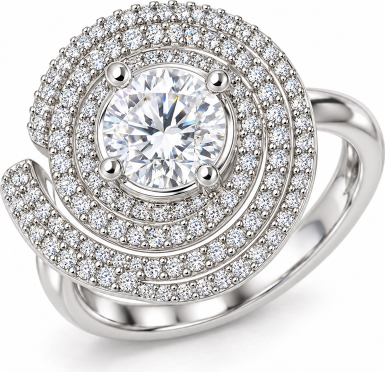
For jewelry reference images, a clear front view shows the main shape and stone arrangement. A side view helps explain projection and setting height. A reverse view shows parts that may be hidden from the front, including posts, connections, and possible marking areas. You can start with the views you have and list the missing ones as questions. Give each reference a short filename or label in the worksheet, and send the actual files separately through the communication channel agreed with BARRY.
2. Identify the current drawing
For a jewelry CAD submission, identify the product, revision, date, and units. List the files you have and ask which formats are appropriate for the next stage. A screenshot can help explain appearance, while model details may require a separate file discussion. The bangle drawing shown here is an existing BARRY reference for presenting multiple views. Its dimensions, weight notation, and product code belong to that historical drawing. They should not be copied into a new brief unless they actually describe the product you are asking us to review.
Which measurements should you include?
Earrings
Front · Inner opening · Post & back
Rings
Sizing system · Face · Band profile
Pendants & necklaces
Body · Bail · Chain length
Bracelets
Finished length · Inside shape · Opening
Studs and hoops
For earring dimension specifications, distinguish the decorative front from the fitting. Stud requests may need the front width, height, profile, and proposed post arrangement. Hoop requests should identify the inner opening, outside dimensions, and body width separately. "Small hoops" does not tell us which of these you want reduced. Mark measurement points on a photograph where possible, use consistent units, and state whether the pair is identical or mirrored. If a closure is important to the design, include its reference and the questions you want resolved alongside the measurements.
Rings
A ring size specification should name the sizing system, first sample size, and proposed order range. Add face dimensions, band width, and profile requirements where they influence the appearance. For a ring with a prominent stone-set face, tell us whether that face should keep the same dimensions across the range. If it will sit beside another ring, share a side view or sample reference for the intended pairing. Avoid using one unexplained number for both the ring size and a measured internal dimension; identify exactly what each value describes.
Pendants and necklaces
For a pendant and chain specification, separate the decorative body from the bail or other connection. Body height and total height including the bail describe different measurements. If a chain is part of the request, identify its intended length, appearance, and the connection details that need discussion. Explain whether you are developing a pendant alone, a necklace, or both as separate options. A useful reference shows the relationship between the pendant and the chain, especially when the opening or attachment is important to the proposed product.
Bracelets
A bracelet measurement brief should distinguish a flexible chain bracelet from a rigid bangle or cuff. For a chain style, explain how you are defining the finished length and whether a clasp or extender is included. For a rigid form, identify the inside shape, relevant internal dimensions, and opening details. State which measurements come from an existing sample and which are desired changes. If you do not yet know the dimensions, provide a reference and describe the intended fit so that the next discussion can establish the measurement points.
Describe materials without leaving us to guess
1. Metal and surface finish
Your jewelry material specification should name the base metal separately from its visible finish. If you want to compare materials, list the alternatives instead of combining them into one description. Then explain the surface direction: polished, textured, or another specified appearance, including where it applies. A gold-colored photograph is a color reference, not a complete material specification. When your team already has an approved finish sample, include its reference. If you are unsure which construction suits the design and commercial target, record that as a question for us to discuss.
2. Stones and decorative elements
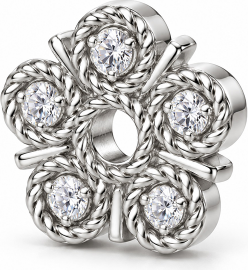
For a gemstone specification sheet, name any required stone type, shape, dimensions, and color reference. Specify the relevant origin category when it is part of your requirement. If the stone type is undecided, describe the appearance you want rather than filling the field with an assumed identity. For a pearl request, include shape, size direction, and the visual features that matter to the design. Mark which information is essential and which remains open. We can then discuss the proposed materials in relation to the setting and the full product.
3. Alternatives and substitutions
A jewelry material substitution request should explain what may change and what must remain consistent. For example, you may want to compare two stone directions while keeping the flower outline, or compare surface options for the same band profile. Keep each proposal identifiable in the brief. Once one is selected, record it as the current direction and preserve the earlier proposal as history. A similar appearance does not automatically make two combinations equivalent, so changes to materials or components should be reviewed with the affected product details.
Make the order and quotation scope clear
Break down the assortment
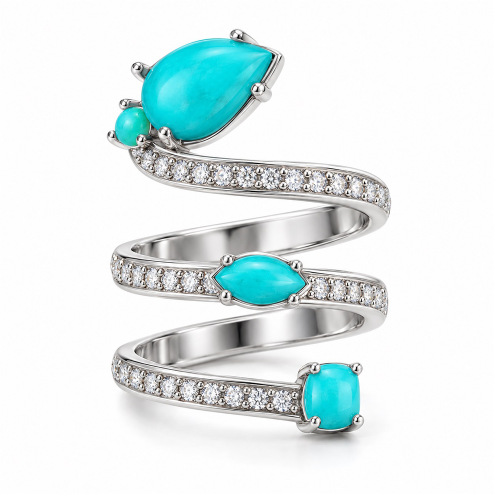
A jewelry quantity breakdown lists each product and its meaningful variations. Separate ring sizes, stone colors, or finishes and identify the unit as pieces, pairs, or sets. If you are still planning the assortment, mark the figures as estimates. Give a matching set its own description and specify what the set contains. This lets the conversation address the actual proposed range. Keep a possible future collection separate from the initial order so that ideas for later development do not become assumed first-order requirements.
Separate sample dates from launch dates
For jewelry sample timing requirements, provide your desired review date and planned launch date as separate entries. Identify whether your artwork, material direction, and quantity plan are ready. Name the person who can approve revisions, especially when several people contribute comments. If a date is fixed for your team, say so early and identify the most important product decision. The proposed schedule can then be discussed with its dependencies visible, rather than treating a launch date as an already agreed production or delivery commitment.
Turn the first brief into a useful product record
Keep one current version
A jewelry design revision log records what changed, where it changed, and who needs to confirm it. Give the brief and its references matching revision labels. When replacing a drawing, identify the superseded file instead of leaving both labeled "final." Keep a short note explaining whether the change corrects an earlier requirement or introduces a new preference. This helps your team and ours discuss the same product and keeps an old color, measurement, or engraving instruction from being carried into the next review.
Review the whole sample
Use a jewelry sample review checklist that follows the object: outline, named dimensions, material references, stone arrangement, surfaces, connections, pair matching, and markings where applicable. Link every comment to the current brief. Mark an item as accepted, requiring revision, or awaiting information so the remaining questions are visible. A photograph can help record a visible difference, while dimensions and component details need their own entries. Keep the approved sample reference and supporting document set together when the product moves to the next discussion.
Frequently Asked Questions
Common questions from designers, brands and buyers
preparing a jewelry design brief
for custom manufacturing.
You can begin a jewelry design request with a sketch, photograph, written concept, or existing sample reference you are authorized to use. Explain the intended product and list the unresolved details. If a CAD file is available, identify its units and revision. We can discuss which supporting files are appropriate for the next stage of your project.
Use the jewelry measurement checklist to identify the relevant points, then mark unknown values as open. Share an existing sample or annotated reference if it helps explain the proportions. Do not fill gaps with measurements from an unrelated product. The first discussion can establish which targets need to be defined before the next drawing or sample review.
Yes. Keep common details together and use a jewelry variation specification to show each proposed combination. Identify the differences and quantities clearly. A substantial change in construction may be easier to discuss as a separate product. The important point is that every variation can be connected to the correct requirements without relying on an unexplained total or an informal nickname.
Yes. Use Contact Now to open the inquiry form and describe the project in the message field, then send your reference files through the communication channel agreed with our team. Keep a copy of the brief before leaving the page, and tell us which product decisions are most urgent so we can respond in a useful order.
Follow the jewelry inquiry checklist: identify the product, reference, requested changes, material direction, relevant sizes, and estimated quantities. Add the question you most need answered next. If your team has a sample review target or launch date, include it as project context. You can bring an incomplete brief to the discussion when its open points are clearly identified.
Send us the product reference and identify what you want to keep and change. For jewelry design customization, useful details include the preferred stone shape and color, metal finish, earring fastening, or necklace clasp. Some changes also affect the surrounding structure: a larger stone may require a different setting, for example. We review these details with you to establish which modifications need an updated drawing or sample before proceeding.
Include your target unit price, estimated order quantity, and the features that matter most to your collection. For custom jewelry pricing, we review the metal specification, stone selection, product construction, and packaging requirements together. Tell us where alternatives are acceptable—for example, stone size or packaging format—so we can discuss options while keeping your priorities clear. The final quotation will depend on the agreed product specifications and order conditions.